

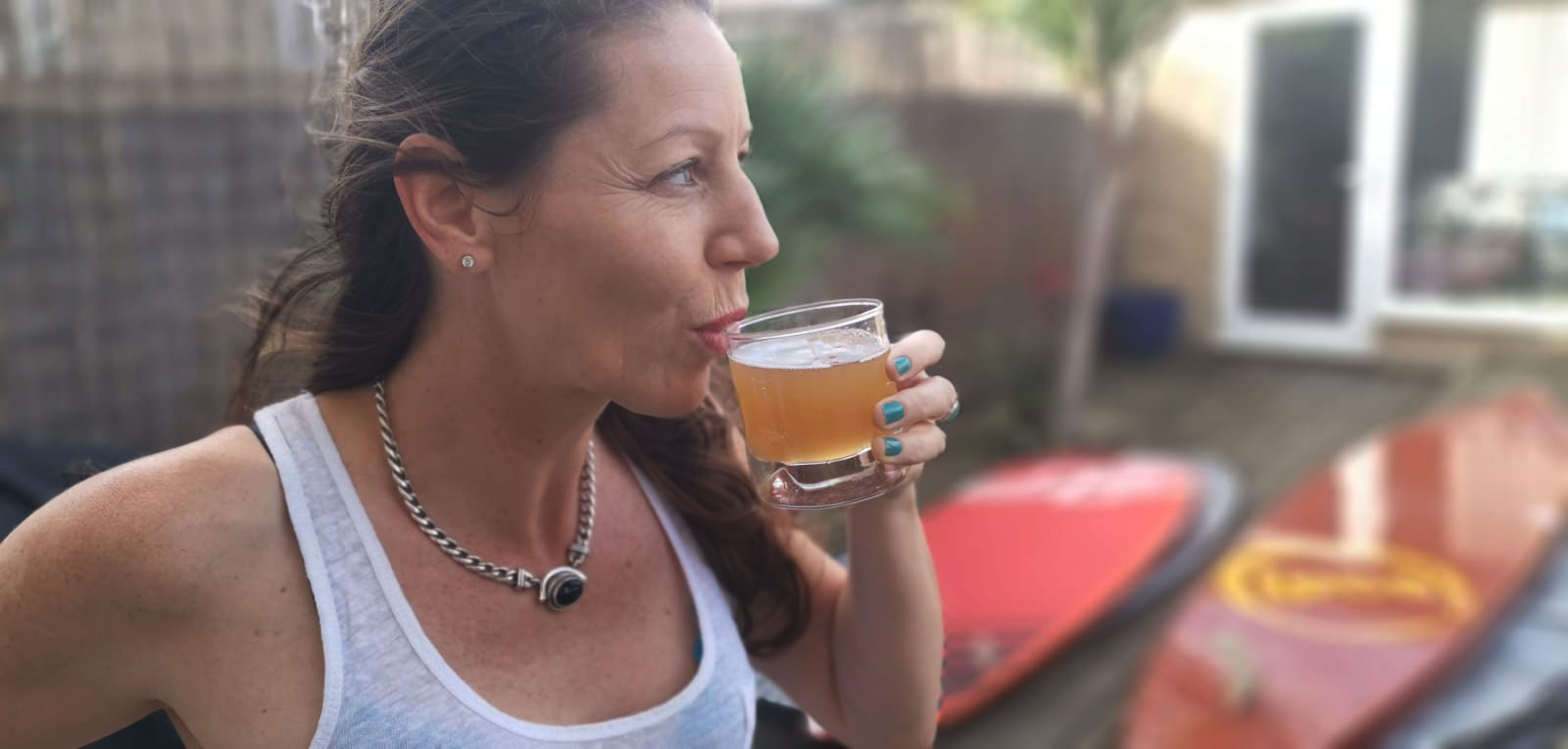
Of late, a super trendy probiotic source has blown away the market. This source is sweet, fermented and effervescent, filling your tummy up with bubbly goodness. If you haven’t guessed it already, I’m talking about Kombucha! But not all kombucha’s are created equally, just like the craft beer scene the kombucha tastes changes from brewer to brewer depending on they’re base ingredients, and because of the nature of the live culture it can react to changes in seasonality and even geographically. So you can expect some variability between brands
Kombucha is a live probiotic drink made with a sweetened green/black tea base, which is fermented with a SCOBY. SCOBY stands for Symbiotic Colony of Bacteria and Yeast. When you a some natural ingredients to flavour during the secondary fermentation process,your kombucha should taste (and feel) amazing.
In fact, Kombucha has loads of health benefits, including improving your gut health and making you feel lighter overall. You can now walk into any supermarket and find dozens of brands on one shelf alone, claiming to be the best kombucha in the UK. But, how do you know the kombucha you just purchased is the real deal?
In this blog, we’ll tell you 7 ways you can differentiate between real and fake kombucha.
WHAT IS REAL KOMBUCHA?
Real kombucha is a raw, unpasteurised fermented tea made using a live culture known as a SCOBY (Symbiotic Culture of Bacteria and Yeast). During fermentation, beneficial bacteria, organic acids, and trace probiotics are naturally produced.
Unlike heavily processed versions, raw kombucha is alive — meaning it contains active cultures that can support gut health, digestion, and overall wellbeing.
In the UK, many supermarket kombuchas are pasteurised or made from concentrate, which removes or reduces these beneficial compounds. That’s why understanding the difference is so important.
Shop now and taste the twist of our kombucha!
1) REAL KOMBUCHA MUST BE REFRIGERATED?
This is one of the easiest and most obvious tellers when buying kombucha. Since it’s a “living-food”, it is not shelf-stable and must always be kept refrigerated. If you’re out shopping for kombucha, avoid the ones that aren’t stocked in the refrigerated section. That’s how you know they aren’t the real deal. Besides, kombucha is best served cold anyway!
2) REAL KOMBUCHA HAD SIMPLE INGREDIENTS
You can tell whether a kombucha is real or fake well before you even open the bottle. There are loads of signs to watch out for on the back label alone, the ingredients being the most telltale ones.
Kombucha is made with a tea base, usually black or green so that’s an essential ingredient to check off the list. You should avoid kombuchas that have tea extracts, essences, or artificial sweeteners.
3) CHECK THE SHELF LIFE (RAW KOMBUCHA DOESNT LAST FOREVER)
When you’re shopping for kombucha, always look for the word “raw” on the bottle. When you see this word, you know that the kombucha has been brewed right, and is natural. The word “raw” proves that heat (pasteurisation) wasn’t used to remove the beneficial microbes created by fermentation. It’s a keyword that indicates the kombucha hasn’t been filtered, pasteurised, or processed, keeping it as natural as it’s meant to be.
Another easy way to know if your kombucha is actually “raw”, is by checking the “best before” date on the bottle. If the date seems unrealistically long, you know that the kombucha isn’t fresh and is likely inauthentic. The best before date proves just how raw and natural your kombucha is. After all, it is a living food, and cannot have an extremely long shelf-life. A good rule of thumb is around 7-9 months .
4) REAL KOMBUCHA CONTAINS NATURAL SUGARS ( NOT ARTIFICAL SWEETENERS)
Sugar is a necessary part of the fermentation process of kombucha. In fact, SCOBY needs sugar to help the healthy gut bacteria to form. That means it should be the prime ingredient in making kombucha.
The reason sugar is super important is that it feeds the bacteria and yeast and provides fuel for them to metabolise.. The fact is the glucose molecule in the sugar is eaten up by the cultures and what remains is the sweetness from fructose (“fruit sugar”), the part of the sugar molecule which gives sugar its sweet taste. Fructose has the sweetest taste, but the least impact on your blood sugar compared to glucose.
Lots of popular shelf-brands in the UK use added juice and artificial flavouring to their kombuchas, which is a huge no-no if you’re trying to get healthier.
Here at Twisted Kombucha, we make sure the sugar content in our drinks is low and our kombuchas contain 0% juice to preserve the authenticity of the drink. When looking out for sugar, make sure your drink contains less than 5g per 100ml. Twisted Kombucha currently aims to have less than 3.5g per 100ml in every bottle.
5) REAL KOMBUCHA HAS A TANGY, FERMENTED TASTE
Anyone who’s drank kombucha before knows it has a characteristic tangy taste to it. In fact, this taste is a huge teller when trying to find out if the drink is the real deal. So, if you’ve taken a sip of kombucha and it tastes tangy and crisp, with a nice balance of sweet and sour notes this is a way to know that it’s authentic and meant to taste that way. The sour taste proves that the fermentation was authentic, just like in all cultured products like kefir, sourdough bread, greek yoghurt and kimchi.
Whenever kombucha does not have this tangy bite, and tastes really like a fizzy soda, it is fake, including kombucha crafted from concentrate.
6) AVOID ADDITIVES AND "NATURAL FLAVOURINGS"
Kombucha is perfectly good without additives, so why foul it up?
Lots of brands add supplements and other powdered probiotics to their kombuchas in the name of “health”. If your kombucha culture is authentic, you don’t need any of these additives. In fact, it’s actually counterproductive and strips the drink of its authenticity.
Make sure to always check for additives when you buy kombucha. Words like “natural flavourings” are a clever way to mask unnecessary ingredients. Real kombucha stays raw, with no added flavours or ingredients to “spice it up” or make it “healthier”. Good kombucha will maintain its natural aromas, flavours and probiotics with no need for any extras.
7) REAL KOMBUCHA IS NOT MADE WITH PROBIOTIC POWDER
Another thing you need to keep an eye out for when shopping for kombucha is probiotic powder. Always check whether the kombucha is made with probiotic powder, that’s how you know it’s fake. Kombucha made with added probiotic powder is NOT a raw product. Real kombucha will contain the intrinsic live bacteria naturally formed during the traditional fermentation process.
It is important to be aware that some producers may claim to make a genuine kombucha by using an acidifier, artificial sweeteners and a “microencapsulated” probiotic powder. However, this process is not true fermentation and these products should not be labeled as kombucha. Some producers may also claim that traditional kombucha does not provide health benefits because the bacteria do not reach the gut. This is false. Traditional fermentation has been used for centuries to produce specific strains of bacteria that have been proven by science to reach the gut and provide health benefits. The microencapsulated powder may contain a probiotic strain of bacteria that is shelf stable, but it is not the same as the true bacteria formed through fermentation.
CONCLUSION
There you have it – 7 sure signs to tell if kombucha is real. If you’re looking for raw, unfiltered, and pure kombucha, look no further. Here at Twisted Kombucha, we brew in small batches using traditional methods to keep every bottle alive, natural, and genuinely gut-friendly.! Visit our online shop to learn more.
0 comments