

Hey, it’s Lou here ! With Diabetes Awareness Month and Sugar Awareness Week this November, I wanted to take a closer look at how naturally fermented foods, like our kombucha, can play a small but meaningful role in supporting balanced energy and steady blood sugar.
When we talk about sugar, it’s easy to think only in terms of restriction, cutting down, avoiding, or completely removing. But what’s often missing from the conversation is how our bodies process sugar, and how much our gut health influences that balance.
It All Starts In the Gut
Your gut microbiome — the community of bacteria living inside you — plays a key role in how your body processes sugar.
It influences:
- how carbohydrates are broken down
- how nutrients are absorbed
- how your body responds to insulin
When your gut is balanced, energy tends to be more stable. When it’s not, you may experience spikes, crashes, cravings, and fatigue.
Fermented foods support this balance naturally. During fermentation, bacteria and yeasts break down sugars and starches into beneficial organic acids and probiotics that help stabilise digestion and support glucose regulation.

The Science Bit
It might sound complex, but it’s actually quite simple:
- Organic acids (like acetic acid) help slow the release of sugars into the bloodstream.
- Probiotics can improve how the body responds to insulin.
- Short-chain fatty acids, which play a key role in energy metabolism and appetite regulation.
Instead of taking expensive supplements, consuming real fermented foods helps your body create these positive changes naturally.
Together, these compounds help your body stay in better rhythm. Fewer sugar spikes, and more steady energy.
Why Variety Matters
Each ferment has its own community of microbes, enzymes, and nutrients, meaning every one adds something different to your gut.
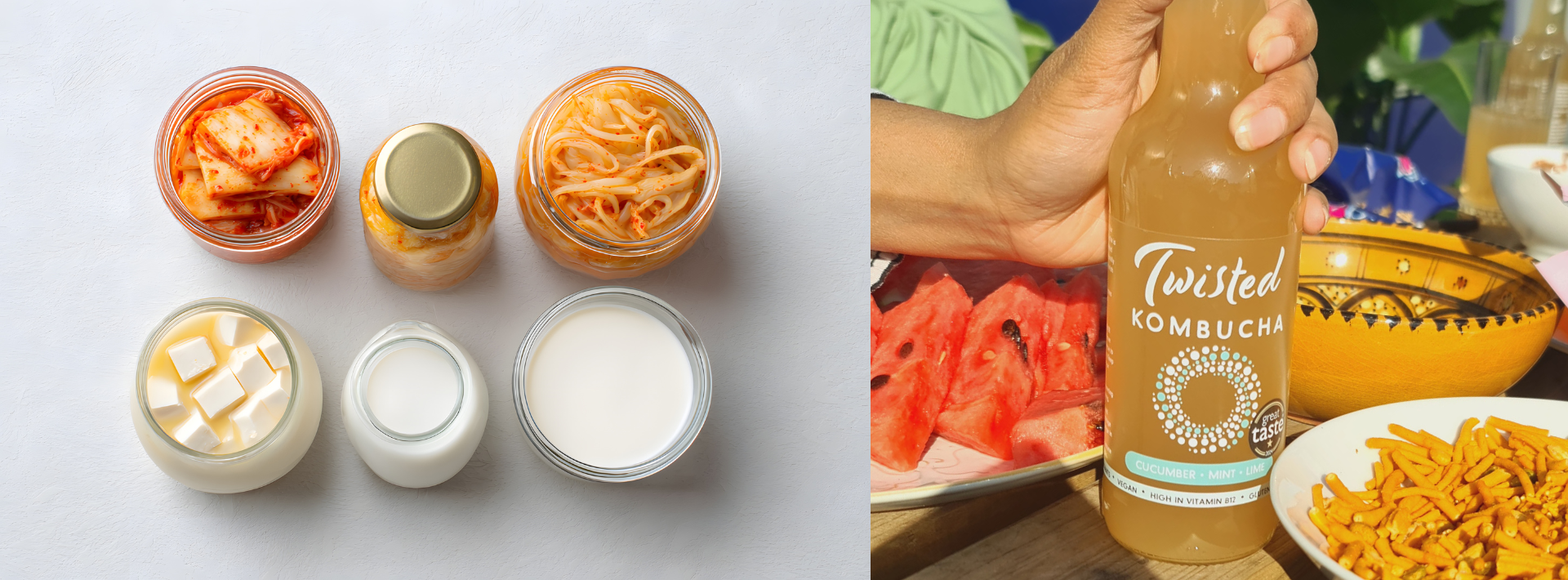
Kombucha brings live cultures, acetic acid, and antioxidants, kefir offers more live cultures and proteins, and miso and tempeh provide isoflavones and minerals. Together, they create diversity, and diversity is what keeps your microbiome resilient.
Try mixing things up:
A spoonful of sauerkraut with your lunch bowl
A splash of kefir in your morning smoothie or overnight oats
A dollop of miso in soup
And, of course, a glass of Twisted Kombucha as an afternoon pick-me-up
Does kombucha spike blood sugar?
This is one of the most common questions.
Authentic kombucha is typically low in sugar because most of it is used during fermentation. What remains is a small amount of natural sugar, along with organic acids that may help slow absorption.
However, not all kombucha is the same. Some commercial versions contain added sugars or juices, which can affect blood sugar differently.
Choosing the Right Ferments
When you’re looking for fermented foods, a few simple tips make all the difference:
Choose unpasteurised and refrigerated products – That’s how you know the microbes are alive
Check the label – Avoid products that add sugar after fermentation or any preservatives. Look out for non-nutritive sweeteners like stevia glycosides, sucralose, and erythritol.
Look for key words – Terms like “raw,” “naturally fermented,” and “live cultures” are signs of authentic ferments.
Slow, traditional fermentation is key. It’s what gives real ferments their unique flavour and function. Added sugars and preservatives and minimise or even eliminate the amazing benefits of ferments.
Bringing Ferments Into Everyday Life
Adding ferments doesn’t have to be complicated. You can easily add them into your everyday meals.
Start small. A glass of kombucha instead of bottled teas or juices, a side of sauerkraut or kimchi with your meals, some natural yoghurt or kefir with your breakfast. Over time, your gut bacteria adapt and grow, helping you feel more balanced throughout the day.
It’s not about being perfect. It’s about small, consistent habits that work with your body.
Listening to Your Body
Everyone’s body responds differently to food, and that includes fermented foods, too. If you use a blood glucose monitor or a continuous glucose device, try testing your own response when you introduce new ferments.
Notice how your blood glucose behaves after meals, how high it rises and how quickly it returns to normal. You might fin that certain ferments, like kombucha or kefir, support a steadier post-meal response than others.
This kind of self-testing turns your health into a personal experiment. It’s a way to learn what works best for your body. Again, it’s not about chasing perfection, but about understanding your own body and how food affects you.
Real Fermentation, Real Balance
Here at Twisted Kombucha, we brew every batch slowly and naturally. No pasteurisation, no shortcuts, no added probiotics. Just tea, sugar, and time + love.
That process transforms sugar into beneficial acids and creates a living drink that supports balance from the inside out.

Bottom Line
Balancing blood sugar isn’t just about removing sugar — it’s about supporting your body’s natural systems.
Fermented foods like kombucha can be part of that, helping to support gut health, steady energy, and overall wellbeing.
It’s not about being perfect — just consistent.Insulin
So whether it’s a glass of Twisted Kombucha, a spoon of sauerkraut, or a bowl of miso soup, every little bit of real fermentation helps your body find balance naturally.
Here’s to Real Kombucha. Real Benefits. Real Balance.
0 comments